
Could your gas heater be quietly leaking a toxic gas while your family sleeps? It is a chilling thought for any homeowner, especially since carbon monoxide is invisible and completely odourless. Many people in Adelaide assume their heating is fine as long as the air is warm, but underlying issues like blocked ventilation or faulty drainage can create hidden dangers that put your household at risk.
We know you want to keep your family safe without the stress of navigating confusing technical regulations. It is common to feel anxious about rising energy costs or the specific requirements of South Australian gas laws. This guide explains exactly what happens during a professional gas heater safety check Adelaide residents need to stay protected. You will discover how to identify warning signs, such as soot stains or moisture build-up from blocked condensation drains, and how to ensure your system meets strict local standards.
We will walk through the essential steps our licensed technicians take, from checking flue clearances to testing for dangerous leaks. You will gain a clear understanding of how to maintain a healthy home and keep your heating bills under control throughout the coldest months.
Key Takeaways
- Understand how blocked condensation drains and flues can lead to dangerous gas build-up or moisture damage within your Adelaide home.
- Learn the technical steps involved in a professional gas heater safety check Adelaide homeowners rely on to ensure their systems are free from internal blockages.
- Identify early warning signs like soot marks or moisture build-up that suggest your heater’s drainage system needs urgent professional cleaning.
- Discover the legal requirements for South Australian gas compliance and why all plumbing and gas work must be completed by a licensed professional.
- Learn how regular safety audits improve energy efficiency by ensuring your heating and drainage infrastructure is operating at peak performance.
Why an Annual Gas Heater Safety Check is Essential for Adelaide Homes
A professional gas heater safety check Adelaide homeowners invest in is far more than a simple cleaning. It is a technical audit. Licensed fitters examine gas pressure settings, ensure proper ventilation, and test the combustion process to confirm the unit is burning fuel safely. Without this check, your heater might be operating inefficiently or, worse, leaking toxic gases into your living room. It is a vital step in maintaining a healthy home environment.
Carbon monoxide is often called the “invisible killer” because it has no smell, taste, or colour. You cannot detect it with your senses alone. Professional tools are required to measure levels and ensure your home remains safe. In Adelaide, our diverse housing styles present unique challenges. Older villas in suburbs like Unley or Prospect often have outdated flue systems that struggle with modern safety standards. Conversely, new energy-efficient homes are built to be airtight. While this keeps the heat in, it can also trap toxic gases if a heater fails. A balanced system is crucial for your family’s safety.
Beyond the safety aspect, there is a clear financial incentive for regular maintenance. A clean, well-adjusted heater uses less gas to produce the same amount of warmth. Regular checks prevent parts from working harder than they should, which naturally lowers your winter energy bills and extends the lifespan of your appliance.
The Risk of Carbon Monoxide Poisoning
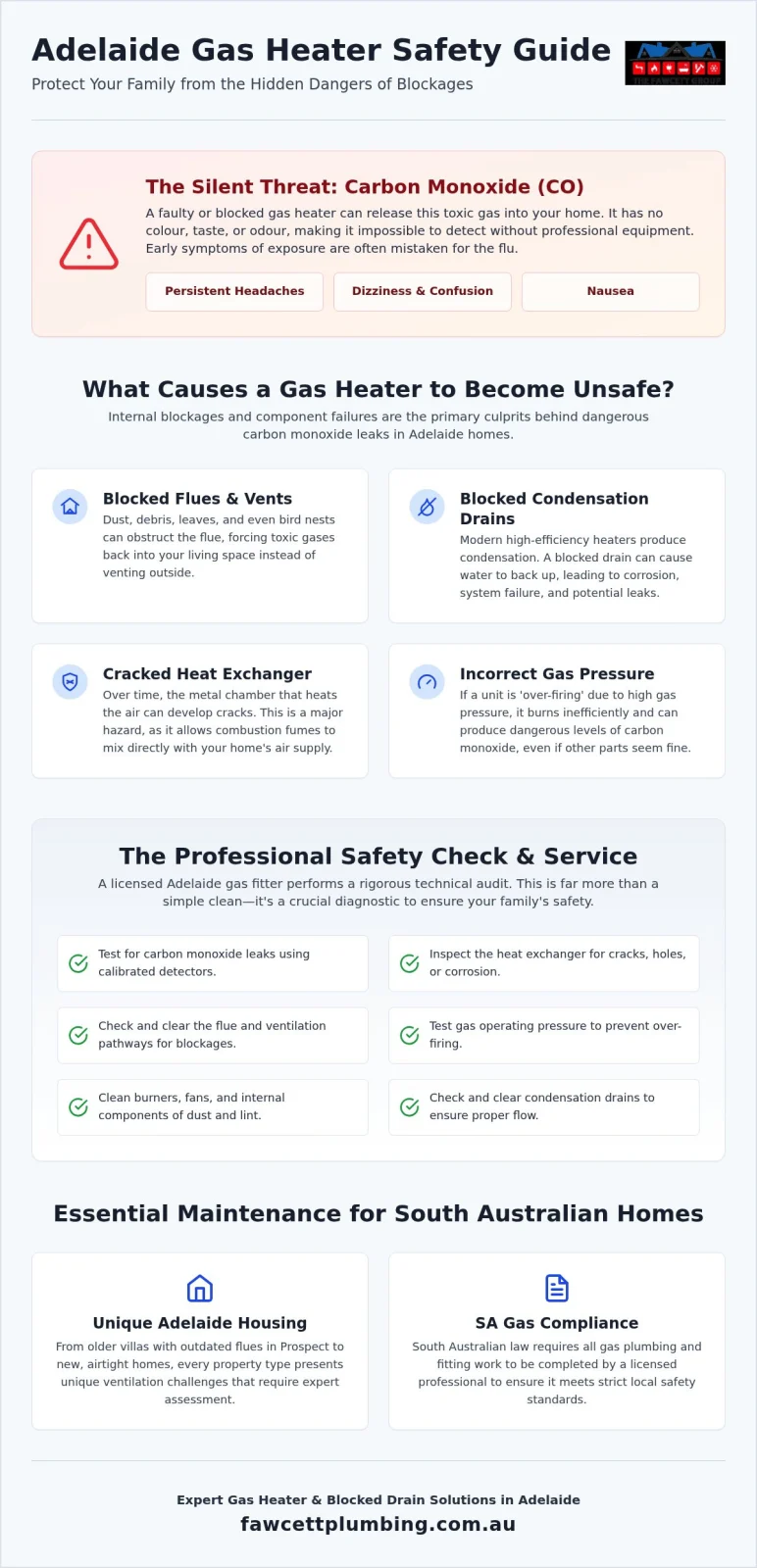
Faulty flues or cracked heat exchangers are the primary culprits for gas leaks. When these components fail, combustion by-products escape into your home instead of being vented outside. Exposure to the dangers of carbon monoxide often presents as flu-like symptoms. You might experience persistent headaches, dizziness, or nausea whenever the heater is running. Because it is impossible to see or smell, a professional safety check is the only way to identify this silent killer before it causes harm.
When to Book Your Adelaide Gas Service
Timing is everything for home maintenance. We recommend booking your gas heater safety check Adelaide service before the first major cold snap, typically in May or June. Heaters sit idle throughout the hot South Australian summer. This allows dust, lint, and even spider webs to build up inside the burners. These obstructions can cause uneven burning or ignition failures when you finally turn the unit on. As Adelaide blocked drain experts, we frequently see how debris and build-up impact every part of a home’s infrastructure. Just as a blocked pipe causes a backup, a “blocked” heater burner creates safety hazards that require expert attention to resolve.
The Professional Gas Heater Safety Checklist: What We Inspect
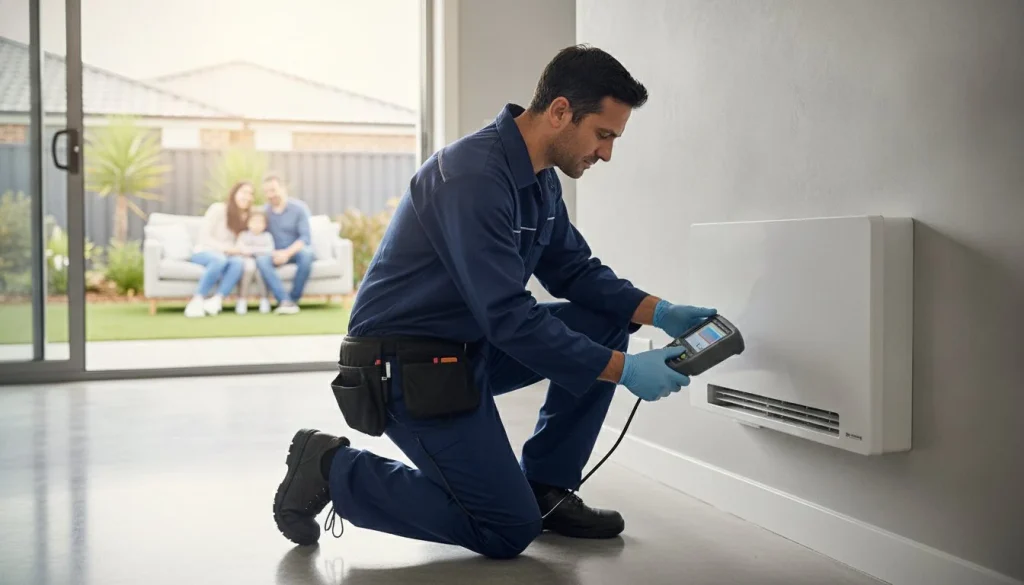
Many homeowners mistake a quick vacuum and a wipe-down for a proper service. A surface clean might make the unit look better, but it does nothing to protect your family from technical failures. A professional gas heater safety check Adelaide residents book with us is a rigorous technical audit. It involves testing internal components that are invisible to the naked eye. Only a licensed gas fitter Adelaide homeowners can trust has the training and legal authority to perform these tests. We use specialised, calibrated carbon monoxide detectors to identify leaks at parts-per-million levels. These tools find hazards that no human sense can detect.
Our process is methodical and follows strict safety protocols. We don’t just “tick a box.” We dismantle key sections of the heater to ensure every part of the combustion and exhaust system is functioning correctly. If your system hasn’t been professionally assessed in over two years, it’s a good idea to book an inspection with a local expert to ensure your home remains safe.
Technical Inspection Points
We begin by testing the gas operating pressure. If a unit is over-firing, it produces excessive heat and can lead to a dangerous buildup of carbon monoxide. Our technicians also conduct a detailed inspection of the heat exchanger. We look for hairline cracks or signs of corrosion that could allow combustion gases to seep into your home’s air supply. Just as a small leak in a pipe can cause a major headache, a tiny crack in a heat exchanger is a significant safety risk. We also focus on the following:
- Flue Terminal Inspection: We check for obstructions like bird nests, leaves, or debris that can block the exit of exhaust gases.
- Burner and Pilot Assembly: We clean these components to ensure a crisp, blue flame. A yellow or “lazy” flame is a primary indicator of incomplete combustion and potential gas leaks.
- Condensation Drainage: For modern high-efficiency heaters, we ensure the drainage lines are clear of blockages to prevent moisture damage or system shutdowns.
Ventilation and Spillage Tests
A heater can be in perfect condition but still pose a threat if the room’s ventilation is poor. We perform a “smoke match” or spillage test to verify that all exhaust gases are exiting through the flue as intended. One of the most common issues we find in modern Adelaide homes is “negative pressure.” This occurs when powerful kitchen rangehoods or bathroom exhaust fans create a vacuum effect. This vacuum can actually pull toxic exhaust gases back down the heater’s flue and into your living space. We ensure your room ventilation meets the strict requirements of Australian Standards (AS/NZS 5601), providing peace of mind that your home’s air stays fresh and safe.
Warning Signs Your Gas Heater Needs Urgent Maintenance
While a scheduled gas heater safety check Adelaide residents book annually is your best defence, you shouldn’t wait for your next appointment if the unit starts behaving strangely. Heaters often provide subtle warnings before they fail or become a serious hazard. Recognising these changes early can prevent a minor service from turning into a major emergency. Being proactive about your home’s gas infrastructure is the key to keeping your family safe and your energy bills predictable.
Physical changes to the unit or its surrounding area are frequently the first indicators of a developing gas leak or combustion issue. If you suspect something is wrong, your first step should be to follow our professional guide on what to do if you suspect a gas leak. Acting quickly is essential to mitigate risks.
Visual and Physical Red Flags
Keep a close eye on the appearance of your heater and the walls around it. Sooty stains or yellow and brown discolouration on the heater panels or the adjacent wall are major red flags. These marks usually indicate that the flue is blocked or the burner isn’t consuming gas correctly. This leads to incomplete combustion and a high risk of carbon monoxide production. You should also watch for the following:
- Flame Colour: A healthy gas flame should be crisp and blue. If the flame is yellow, orange, or “lazy” and flickering, the unit requires an immediate technical audit.
- Pilot Light Issues: A pilot light that frequently blows out or struggles to stay lit suggests a faulty thermocouple or a build-up of debris in the assembly.
- Window Condensation: If your windows are suddenly dripping with moisture whenever the heater is running, it may mean exhaust gases are being trapped inside your home rather than venting through the flue.
Auditory and Olfactory Signals
Gas heaters should operate relatively quietly. If you start hearing strange popping, banging, or whistling noises during start-up or operation, the internal components are likely struggling. These sounds often point to a cracked heat exchanger or heavily soiled burners that are causing “delayed ignition.” Smells are equally important. While natural gas is odourless, suppliers add a chemical called mercaptan that smells like rotten eggs. If you detect this scent, or a persistent acrid, burning odour, shut the unit off immediately.
In some cases, issues with your heating system can be linked to other household infrastructure. If you hear strange plumbing sounds like gurgling or whistling in your walls while the heater is active, it could indicate a fault in your home’s shared ventilation or drainage lines. Our technicians look at the home as a whole to ensure every system is working in harmony.
South Australian Gas Regulations and Compliance
In South Australia, the Office of the Technical Regulator (OTR) oversees the safety and technical standards for all gas installations. These regulations aren’t merely suggestions; they are strict legal requirements designed to protect the community. When you book a gas heater safety check Adelaide homeowners can trust, you’re ensuring that your appliance complies with these rigorous state-specific rules. Only a licensed gas fitter has the training to navigate these complexities and certify that your system is safe for operation.
Attempting DIY gas repairs is not only illegal but also incredibly reckless. A single loose connection or an improperly seated seal can lead to catastrophic fires or silent carbon monoxide leaks. Beyond the physical danger, uncertified work can void your home insurance policy. If a fire occurs due to illegal gas work, most insurers will refuse to pay out your claim. It’s simply not worth the risk. You must always ensure a professional provides a Gas Compliance Certificate in SA for any significant work performed.
What is a Gas Compliance Certificate?
This certificate is your legal proof that the work performed meets the latest South Australian safety standards. It acts as a formal record of the technician’s findings and any repairs made. You’ll often need this document when selling your Adelaide home or when lodging an insurance claim related to your heating system. Every major gas repair or installation requires an official record for your safety. It provides the paper trail necessary to prove you’ve maintained your property responsibly.
Landlord Obligations in Adelaide
Landlords in South Australia have a clear duty of care to provide safe gas appliances for their tenants. While state law doesn’t mandate a specific yearly frequency for residential checks, industry best practices and the OTR strongly recommend a professional gas heater safety check Adelaide wide every two years. This helps identify issues like blocked flues or faulty burners before they endanger residents. For property managers overseeing multiple units, our commercial plumbing services provide streamlined compliance tracking and safety audits across your portfolio. To stay on the right side of the law and protect your investment, ensure your home meets all SA safety regulations by booking a licensed inspection today.
Why Choose Fawcett Plumbing for Your Adelaide Gas Safety Check
Since 1986, Fawcett Plumbing has been a stable and enduring fixture in the Adelaide community. We are a family owned and operated business with a deep-rooted commitment to the safety of our neighbours. When you book a gas heater safety check Adelaide homeowners trust, you’re getting more than just a quick inspection. You’re gaining the benefit of 40 years of local experience. We don’t just “tick a box” and move to the next job. Our team takes a methodical approach to ensure your home is truly protected. We treat every property as if it were our own, delivering a level of care that corporate franchises simply cannot match.
Our expertise isn’t limited to just one appliance. We understand how your home’s entire utility system works together. For example, a blocked condensation drain in a modern heater can lead to moisture damage or system failure if not handled correctly. Our technicians are multi-trade experts who specialise in gas leak detection, identifying hidden faults that others might miss. We believe in honesty and transparency, which is why we provide clear, upfront pricing with no hidden fees. You’ll never be surprised by an unexpected charge after the work is finished.
Our Local Adelaide Expertise
We’ve spent decades working on Adelaide’s unique gas infrastructure, from the historic homes in the inner south to the modern developments in the north. Our licensed gas fitters are intimately familiar with all major brands, including Rinnai and Braemar. We know the specific failure points common to these units and how South Australian conditions can affect their performance. Our technicians live and work in your local suburb. They aren’t just contractors; they’re seasoned professionals who take pride in their craft. This local presence allows us to respond quickly and provide a level of service that is both meticulous and caring. Business owners with commercial premises can learn more about maintaining gas systems across larger properties by reading our guide to finding a qualified commercial gas fitter Adelaide businesses rely on for maintenance and compliance.
Booking Your Service Today
We’ve streamlined our booking process to be as efficient as possible for both residential and commercial clients. Whether you need a routine audit for your family home or compliance checks for a large commercial property, we have the resources to help. We also understand that gas emergencies don’t wait for business hours. That’s why we provide 24/7 support for suspected gas leaks or complete heater failures. Your safety is our primary concern. Contact Fawcett Plumbing to book your gas heater safety check today and ensure your home remains a safe haven all winter long.
Secure Your Home’s Warmth and Safety Today
Don’t leave your family’s safety to chance this winter. A faulty heater is more than just an inconvenience; it is a serious health risk that requires expert attention. By understanding the warning signs like soot stains and strange noises, you can act before a minor fault becomes a dangerous emergency. Remember that a professional gas heater safety check Adelaide residents trust includes comprehensive CO testing to detect the invisible threats you cannot see or smell.
Fawcett Plumbing has been serving the Adelaide community since 1986. Our licensed SA gas fitters provide the peace of mind that comes from decades of local experience and technical expertise. We ensure your system meets all South Australian compliance standards while operating at peak efficiency to keep your energy bills low. It is a simple step that protects your home and your loved ones for years to come.
Ready to ensure your heating system is in top condition? Book your professional gas heater safety check with Fawcett Plumbing today. We are here to help you stay warm and safe throughout the coldest months.
Frequently Asked Questions
How often should I have a gas heater safety check in Adelaide?
You should have your gas heater checked at least every two years to ensure it remains safe and efficient. While there isn’t a mandatory law for residential owners, the South Australian Office of the Technical Regulator strongly recommends this frequency. Booking a gas heater safety check Adelaide wide before the winter season helps catch issues like blocked flues or cracked heat exchangers. It prevents emergency breakdowns when you need warmth the most.
What is the difference between a gas heater service and a safety check?
A standard service focuses on cleaning and performance, whereas a safety check is a technical audit of your home’s air quality. During a safety check, we use calibrated tools to test for carbon monoxide and inspect the integrity of the heat exchanger. A service might involve cleaning the burners, but the safety check ensures that no toxic gases are leaking into your living space or being pulled back by negative pressure.
Can I check for carbon monoxide leaks myself?
No, you cannot accurately test for carbon monoxide leaks yourself because the gas is completely odourless, colourless, and tasteless. While household CO alarms provide some protection, they are not a substitute for professional testing. Our licensed technicians use sensitive electronic equipment to measure gas levels at parts-per-million. These tools identify tiny leaks that a standard domestic alarm might miss, ensuring your family stays safe from the “silent killer.”
Why does my gas heater smell like burning when I first turn it on?
A burning smell is usually caused by dust or lint that has settled on the burners and heat exchanger during the summer months. When you first ignite the heater in autumn, this debris burns off, creating a temporary acrid odour. However, if the smell persists or is accompanied by soot marks, it could indicate a more serious combustion problem. A professional clean of the burner assembly usually resolves this issue quickly.
Do I need a safety check for a flueless gas heater?
Yes, flueless gas heaters require regular safety checks because they discharge combustion products directly into your room. Without a flue to carry exhaust outside, these units rely heavily on fixed room ventilation to keep air safe. We check that these vents are not blocked and ensure the heater is burning fuel cleanly. Because these units have a higher risk profile, maintaining them is critical for preventing indoor air pollution.
How long does a professional gas heater safety check take?
A professional gas heater safety check Adelaide homeowners book usually takes between 45 and 90 minutes. The exact time depends on the type of unit, such as a wall furnace versus a complex ducted system. During this time, our technician performs a series of technical tests, including spillage checks and pressure testing. We take our time to be thorough, ensuring every point on the safety checklist is completed before we leave.
What happens if the technician finds a fault with my heater?
If our technician identifies a safety hazard, they are legally required to isolate the appliance to prevent immediate danger. We will clearly explain the nature of the fault and provide a detailed quote for the necessary repairs. Once the unit is fixed and passes all safety tests, we issue a Certificate of Compliance. Our goal is always to restore your heating safely and efficiently while keeping you fully informed of the process.
Is a gas heater safety check a legal requirement for Adelaide landlords?
Landlords in South Australia have a legal duty of care to ensure all gas appliances provided in a rental property are safe. While specific legislation doesn’t mandate annual checks, the OTR and Consumer and Business Services recommend a professional gas heater safety check Adelaide property managers can rely on every two years. Failing to maintain these appliances can leave landlords liable for injuries or property damage caused by faulty heating systems.